CEE: Rates on hold as oil shock clouds outlook but avoids panic
- 16 April
- Czech Republic Hungary
CEE central banks remain cautious after the Middle East energy shock, but rate hikes are not imminent. Poland and the Czech Republic stay on hold as inflation risks remain manageable, while Hungary turns more hawkish amid weaker growth and delayed easing




Poland: NBP stays calm in the face of energy shock
Poland’s central bank maintains a neutral rather than a hawkish stance in response to the Middle East energy shock. Not only did the National Bank of Poland cut interest rates by 25bp in March, after the Israeli/US attack on Iran, but it also delivered balanced communication following its April decision to hold rates flat. The NBP appears to share our view that this mainly constitutes a supply-side shock, while the 2019-23 CPI spike was a combination of supply and demand shocks with much more conducive conditions for inflation pass-through.
The NBP Governor stated that there is no risk of a significant increase in inflation from higher oil prices. Adam Glapiński noted that a supply-side shock raises inflation but may also dampen economic activity, thereby generating some disinflationary impulses. He also outlined a range of arguments indicating that Poland is not facing heightened inflation risks:
As a result, the central bank has shifted to a 'wait‑and‑see' approach. It is unlikely to resume rate cuts in the near term, but it also does not view rate hikes as necessary at this stage.
We expect NBP interest rates to remain unchanged this year, as the inflation outlook has deteriorated and become more uncertain.
Czech Republic: Higher inflation and slower growth remain manageable
Our perhaps optimistic scenario of the Middle Eastern conflict lasting roughly two months, with Brent Crude averaging above $100/bbl until April and then gradually declining, remains a probable outcome. As the Czech economy entered the negative external supply shock in good shape, the anticipated upward effect on overall prices and downward effect on economic performance will still leave the economy insulated.
For sure, we expect noticeably higher inflation and slower economic expansion than before the attacks on Iran. Still, both variables would record a pace of around 2.2% this year, which would allow the Czech National Bank to do the right thing in this type of shock: wait with unchanged policy rates and see how all the forces come together.
Nevertheless, should the conflict drag on, with Brent above $100/bbl until the end of the year, with repercussions for supply chains and global economic activity, we would enter a different world, where non-linearities and strong feedback loops kick in. In such a case, Czech real economic growth would ease to around 1.5% this year and the next, while headline inflation would average 2.8% this year and climb to above 3% on average the next year.
Hungary: A new government won't fix short-term economic woes
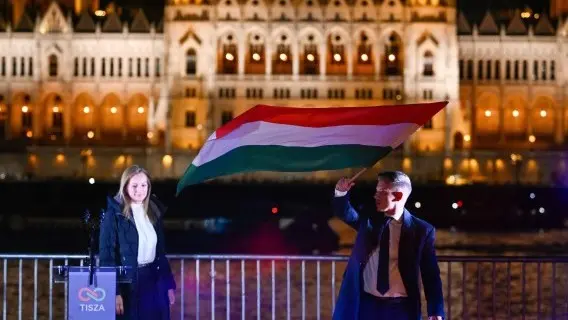
The ousting of Viktor Orbán in Hungary has dominated news headlines, but a change in government won't necessarily have a significant short-term impact on the real economy. That's because its structure and, of course, geopolitics, are still mostly shaping the outlook for the rest of the year. Based on the hard data, Hungary’s economy was pretty mixed in the first quarter of the year. We still expect Hungary to achieve meaningful growth this year, though we have had to lower our expectations once again.
Geopolitical risks continue to pose a serious threat to Hungary’s growth prospects. We have reduced our 2026 growth forecast from 1.7% to 1.6%. Based on the latest data for February, it appears that the strong economic momentum observed earlier is fading. However, retail sales remain the sole driving force and the last hope for growth.
Inflation has continued to show a surprisingly positive picture, standing at only 1.8% year-on-year. This demonstrates resilience in the face of the initial energy price surge, but further inflationary pressures are on the way. Despite the low inflation rate, the National Bank of Hungary kept the base rate unchanged in March. However, the war in the Middle East has forced the bank to revise its macroeconomic projections and adopt a more hawkish stance. Forward guidance in the March press release indicates a hawkish bias, stating that maintaining price stability requires tight monetary conditions. We do not expect an interest rate cut in the coming months.
The ongoing war in the Middle East continues to put significant pressure on oil markets, particularly given Hungary's status as a net energy importer. Persistently high oil prices are hindering the normalisation of inflation and inflation expectations, and making it more difficult to break out of economic stagnation.
Content Disclaimer
This publication has been prepared by ING solely for information purposes irrespective of a particular user's means, financial situation or investment objectives. The information does not constitute investment recommendation, and nor is it investment, legal or tax advice or an offer or solicitation to purchase or sell any financial instrument.Read more
Authors




Included in the following bundle

ING Monthly: The world waits for a climbdown
- This bundle contains 13 Articles