- Quick take
- 10 June
- Italy
Italian industrial production proves resilient in April
This was the third consecutive monthly expansion, which is good news. Still, as the underlying drivers of the demand boost might still prove temporary, the data should be interpreted with caution. Call it resilience, nothing more
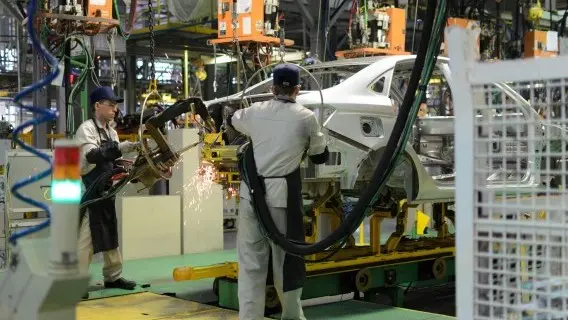

The impact of the war in the Middle East on Italian industrial production has so far been contained. In April, the seasonally adjusted industrial production print was up 0.5% on the month (after +0.6% in March) – the third consecutive monthly improvement. The working days adjusted measure was up 1.3% on the year and the average of calendar adjusted production over the first four months of 2026 is 0.6% higher than in the same period of 2025.
Progress was not evenly spread across the main industry groups, though. The bulk of gains rests with investment and intermediate goods, with consumer goods marginally down on the month notwithstanding a solid monthly rebound in the durable component.
Sector wise, the main highlight was a solid monthly rebound in chemical products and confirmed solid growth in production of machinery and transport equipment, the latter remaining by far the best performing sector year to date – likely helped by incentives on car purchases. The monthly rebound in the production of refined oil products might reflect an increase in demand following supply disruptions in the Middle East because of the war.
All in all, April production data points to the relative resilience of manufacturing versus services. However, we are talking about resilience within the framework of a very tentative turnaround: nothing more, for the time being. This is a pattern which might continue in May, if published business surveys are any guide. The EU Commission manufacturing business confidence index was stable in May, supported by a marginal improvement in orders and in stocks of finished goods. The manufacturing PMI May release was even more upbeat, posting the strongest reading since April 2022. Again, at the heart of the improvement was a combination of new orders and precautionary stock building by customers. The very nature of such a demand boost should induce necessary prudence in calling any new trend, as it might prove temporary. Furthermore, the soft start of German production, notwithstanding a potentially strong fiscal push, calls for a prudent approach in interpreting Italian developments, given the strong interlinks between the two economies.
Having said that, April data points to a decent start to the second quarter, where industry and services might balance out, allowing Italy to avoid a GDP contraction after a surprisingly strong first quarter.
Content Disclaimer
This publication has been prepared by ING solely for information purposes irrespective of a particular user's means, financial situation or investment objectives. The information does not constitute investment recommendation, and nor is it investment, legal or tax advice or an offer or solicitation to purchase or sell any financial instrument.Read more