- Quick take
- 26 June
- Rates Japan
Higher Tokyo inflation, hawkish BoJ comments, up odds of October hike
Tokyo’s CPI inflation rose in June, suggesting that second-round effects from higher oil prices are increasing, while Bank of Japan officials are sounding more hawkish. With core prices likely to accelerate going forward, we have brought forward our BoJ rate-hike call to October from December

| 1.7% |
Tokyo CPI inflation (%YoY)Core excluding fresh food and energy rose 1.9% |
| Higher than expected | |
Tokyo inflation picked up for the first time in eight months
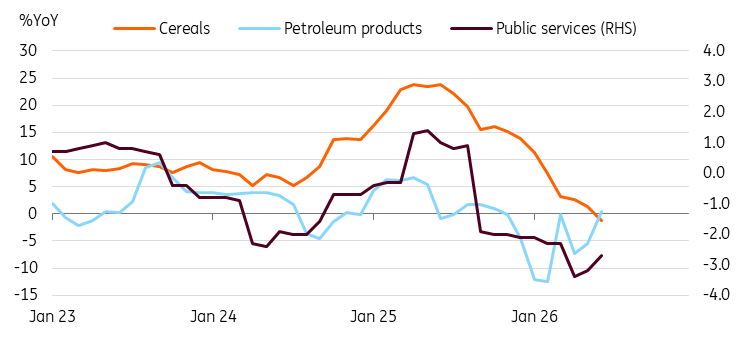
Headline Tokyo inflation rose 1.7% year-on-year (vs 1.4% in May, market consensus 1.6%, ING 1.7%). Government measures and a high base for cereal prices helped keep inflation below 2%, but underlying price pressures continue to build. Core price, excluding fresh food and energy, rose faster, to 1.9% from the previous 1.6%. Despite the gasoline price cap, petroleum prices rebounded to 0.5% after a seven-month-long decline. Clothing and household goods rose 3.2% and 2.1%, respectively.
Headline inflation will be shaped by government utility subsidies over the summer. But we expect second-round effects to become more visible and push core inflation higher. This may lead the BoJ to shorten its usual six-month interval between rate hikes.
Petroleum prices rebounded in June while government price measures still weigh on overall inflation
BoJ comments turning more hawkish
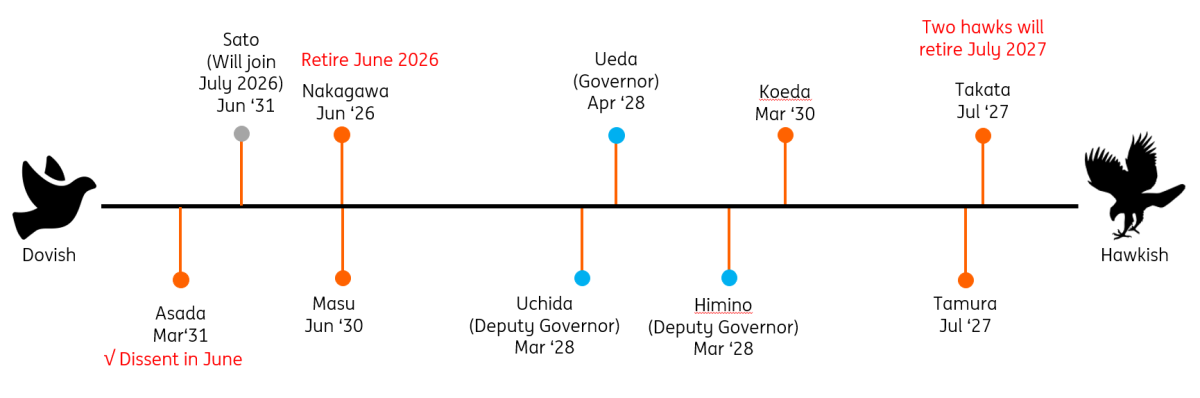
We expect at least two of the BoJ hawks to push rates closer to neutral before their terms end in July 2027. The June meeting minutes revealed that a few board members raised hawkish voices over increasing inflation risks. Also, recent remarks from Governor Ueda and Deputy Governor Himino emphasised the knock-on effects of high oil prices. These will likely start appearing more clearly in consumer prices around the summer. Also, Himino added that corporate prices are rising faster than expected. With solid wage growth, firm asset market performance, and government aid, inflation is expected to pick up more meaningfully in the second half of 2026.
Board dynamics to shift meaningfully in 2H27
With board members Nakagawa retiring at the end of June and Sato joining the board in July, the BoJ appears evenly split. There are two clearly hawkish members and two clearly dovish members. This balance has remained broadly unchanged since the two recent board replacements, but decisions at upcoming meetings are highly likely to be split for some time. We still think of Deputy Govenor Himino as a neutral member, but it seems like he's shifted a bit more hawkish over the last couple of months.
Meanwhile, we expect the Takaichi government to appoint more dovish candidates to replace the two hawks in 2027. This would meaningfully shift the BoJ’s hawk-dove balance in the second half of 2027, perhaps reducing the odds of further rate hikes going forward.
In light of firming inflation and a more hawkish shift in BoJ commentary, we have brought forward our BoJ rate-hike call to October from December. We are pencilling in an additional 25 bp hike in the second quarter of 2027, with the terminal rate is expected to reach 1.75% by the end of the first half of 2027.
Board dynamics are expected to change more meaningfully in 2H27
Content Disclaimer
This publication has been prepared by ING solely for information purposes irrespective of a particular user's means, financial situation or investment objectives. The information does not constitute investment recommendation, and nor is it investment, legal or tax advice or an offer or solicitation to purchase or sell any financial instrument.Read more