- Quick take
- 22 May 2026
- Rates Japan
Japan’s inflation slowed unexpectedly, but BoJ still likely to hike rates in June
Japan’s consumer price index eased unexpectedly in April, mainly due to government measures and lower food prices from last year’s high base. With underlying inflation steady and growth holding firm, we still expect a Bank of Japan rate hike in June

| 1.4% |
CPI inflation (%YoY)Core inflation excluding fresh food rose 1.4% |
| Lower than expected | |
Energy subsidies and waivers led to soft inflation print
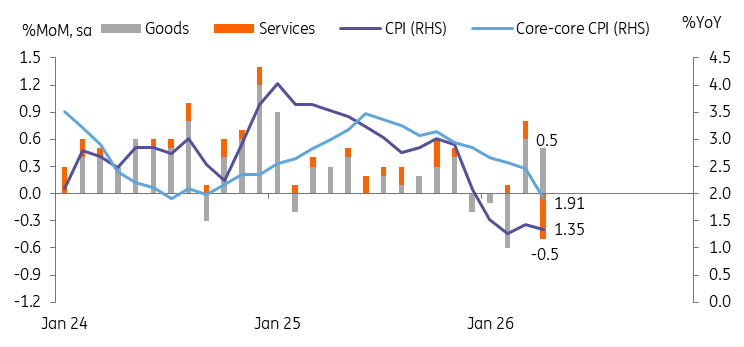
Japan’s headline inflation slowed to 1.4% year-on-year in April (vs 1.5% in March, 1.6% market consensus, 1.8% ING). Core inflation was also below the market consensus and the previous month. In monthly comparison, goods prices rose 0.5% month-on-month, seasonally adjusted, while services prices down 0.5%. It appears that increases in energy prices are contributing to broader inflation across goods. But government social welfare programmes helped reduce overall service prices.
Government energy subsidies drove down energy and utility prices. Energy prices dropped 3.9%, with gasoline prices down 9.7%, thanks to the government’s price cap, while utility fees also dropped 1.5%. Education prices also declined by 6.1%, mostly due to tuition and fee reductions for other school activity programmes. Among food items, rice prices rose 0.6%, coming down continuously from the recent peak of 101.7% last May. The base effect will stay throughout this year.
Government's social welfare programs lowered service prices in April
BoJ watch
The weaker CPI reading may complicate the Bank of Japan’s rate decision next month. However, we continue to believe that a June hike is likely. The BoJ focuses on inflation excluding institutional factors, with core prices projected to remain above 2%. According to the BoJ's outlook, inflation is expected to pick up in the second quarter. Today's data largely aligns with this forecast. Also, pipeline prices, including producer and import prices, rose meaningfully over the past two months. Thus, it should show up in consumer inflation in coming months. Additionally, BOJ board members Koeda and Masu, who supported keeping rates steady in April, recently stated that the BoJ should consider raising rates. Amid increasing inflation expectations, both officials remain cautious about potential risks to the economy. We believe that stronger-than-expected 1Q26 GDP outcomes and firm April exports outcomes earlier this week showed the resilience of the economy despite the energy shocks, supporting a BoJ hike.
Content Disclaimer
This publication has been prepared by ING solely for information purposes irrespective of a particular user's means, financial situation or investment objectives. The information does not constitute investment recommendation, and nor is it investment, legal or tax advice or an offer or solicitation to purchase or sell any financial instrument.Read more