CNB review: Easing likely over as inflationary pressures grow
- 25 June 2025
- Czech Republic
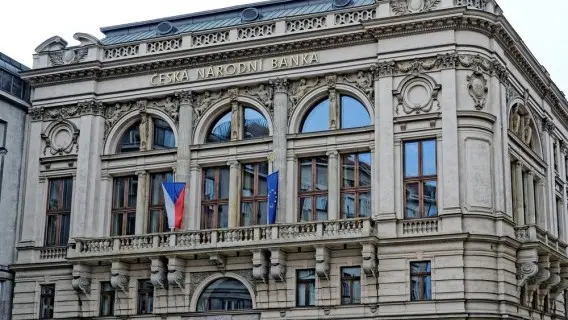
Czech policymakers left the policy rate unchanged at 3.5% in a unanimous vote, highlighting both domestic and foreign price pressures. Residential prices and their impact on imputed rents and core inflation represent a significant risk. While all options are still on the table for future rate moves, a period of stability is the most likely outcome


Inflationary risks have increased
Risks assessed by the Bank Board are deemed pro-inflationary overall, representing a deliberate shift in wording from the moderate inflationary pressures seen beforehand. Indeed, there are more price pressures on both the domestic and foreign fronts, while further rate reductions would have to be justified by an outlook for persistently low inflation. There is currently little hope for such an outcome as agricultural producer prices continue to grow at a double-digit annual rate, and the momentum in core inflation continues due to solid increases in imputed rents.
Property prices on the march

The property market is heating up, with realised prices of existing flats increasing by 15.8% year-on-year in the first quarter of the year, which will, for some time, drive imputed rent increases and core inflation. We see core inflation at 2.7% on average this year in our base-case scenario and reaching 2.9% YoY in December. However, in an alternative upper-bound scenario with continued acceleration of residential prices, core inflation could average 3% this year, crawling up to 3.8% YoY at the end of the year. We see an asymmetric risk towards potent property price growth when looking ahead; therefore, we see no further space for rate reductions over the year. The distortions in the residential market may ultimately cause trouble in the monetary policy domain.
All options are open, but rate stability is likely
Governor Ales Michl suggested that all options are open: if needed, rates will be increased; if needed, rates will be lowered. At the same time, it seems that rate stability for some time is the most likely outcome. The overall tone remains hawkish, with a relatively tight monetary policy stance still needed to maintain inflation close to the target. The economy is expanding, while wage growth in a tight labour market is another inflationary factor to follow carefully.
The Czech National Bank will closely monitor the actions of other central banks and geopolitical developments, while the impact of tariffs and geopolitical turmoil represents risks to the global economic performance. That said, the effect on Czech inflation remains ambiguous. The weak spot mentioned by the Governor is the prolonged softness in Europe's industry, which implies relatively muted demand for Czech exports. On the other hand, German fiscal stimulus may outweigh some of the hesitant European rebound.
Real interest rates remain restrictive

The question about whether the nominal neutral rate might be 3.5% failed to generate much interest, as the Governor reiterated that he did not have a particular number in mind. Whether it is a guiding concept or not, we see 3.5% as the terminal rate in the recent easing cycle, as both headline and core inflation are likely to remain above the target for a longer period of time. This would still ensure that real interest rates remain in positive territory, maintaining the restrictive effect on the economy. We see annual headline inflation in June picking up to 2.9%, while the core rate is expected to increase to 3%, with lower electricity prices representing the only downward risk. Such a reading would again add fuel to the CNB's hawkish attitude.
Our market view
The latest inflation reading was a wake-up call for markets to realise that more rate cuts are not likely to be forthcoming. The market has significantly adjusted market expectations over the past three weeks, leaving essentially only one rate cut in this cycle without a strong conviction on timing. Today's press conference confirmed our hawkish bias, and we see FX benefiting from it. EUR/CZK is below 24.750 at the end of the day, and we see further downside, especially into the next inflation prints. These could start to challenge the last rate cut priced in by markets and support stronger FX sliding to 24.500 in coming months.
The rates space currently looks unappealing, with markets still pricing in some probability of rate cuts. Much like in FX, we believe upcoming inflation prints could challenge market expectations and shift sentiment. The press conference made it clear that the CNB shares our view on inflation risks, and the August meeting is unlikely to be a live one. As such, the next two inflation releases will be key in shaping the market direction, and any upside surprises could make the CZK payer attractive again.
Content Disclaimer
This publication has been prepared by ING solely for information purposes irrespective of a particular user's means, financial situation or investment objectives. The information does not constitute investment recommendation, and nor is it investment, legal or tax advice or an offer or solicitation to purchase or sell any financial instrument.Read more