
South Korea’s inflation rebounds, but not enough to halt rate cuts
South Korea's inflation remained around 2% and exports weakened quite dramatically in September, supporting the argument for rate cuts. However, a renewed rise in property prices in Seoul could delay the timing
| 2.1% YoY |
Consumer price inflation |
| Higher than expected | |
Monthly rise narrowly concentrated in communications fees
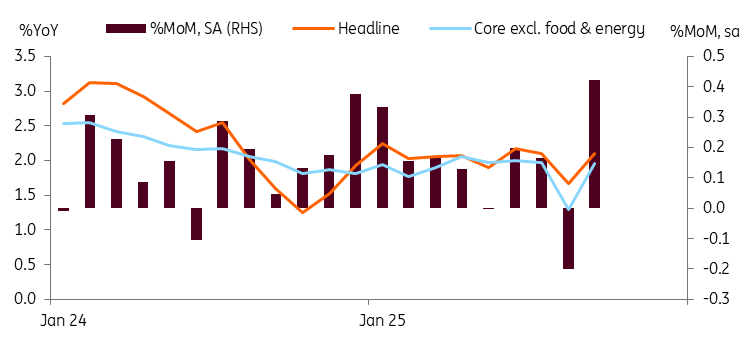
Consumer price inflation rose to 2.1% year-on-year in September from 1.7% in August, broadly in line with market consensus. The rebound was primarily attributed to the end of one-off mobile service charge discounts. Communications prices rose 0.1% following a 13.3% drop in August.
Also, ahead of the early October Chuseok holiday, vegetable and meat prices rose, while oil prices fell thanks to lower global commodity prices. Core inflation, excluding food and energy, also jumped to 2.0% (vs 1.3% in August). Yet today’s inflation data is not likely to prompt any material change in the Bank of Korea’s policy easing stance.
Inflation rebounded but underlying pressures remained soft
BoK watch
We still expect the BoK to cut rates by 25 basis points in October, although rising house prices could push this back to November. We believe that the recent weakness of exports and economic activity points to the need for looser monetary policy. Regarding housing prices, the BoK will rely on government measures, which are likely to be tightened in order to stabilise the housing market. Therefore, the BoK will prioritise supporting growth.
This publication has been prepared by ING solely for information purposes irrespective of a particular user's means, financial situation or investment objectives. The information does not constitute investment recommendation, and nor is it investment, legal or tax advice or an offer or solicitation to purchase or sell any financial instrument. Read more
Download
Download snap