- Quick take
- Published 07:42
- United Kingdom
Remarkably benign UK food prices keep a lid on inflation
UK inflation picked up in July and is likely to peak around 3.2% next winter. We think that's well below the threshold for a rate hike – and we expect the Bank of England to keep rates on hold this year before resuming rate cuts next spring

The bar for a Bank of England rate hike remains high. That’s the main message from today’s UK inflation figures.
Headline inflation is up three-tenths of a percentage point to 2.9%, on the well-telegraphed rise in household energy bills and also a bigger rise in social rents than this time last year. That was offset by July’s short-lived dip in petrol and diesel prices (spoiler alert: that won’t last into August’s figures).
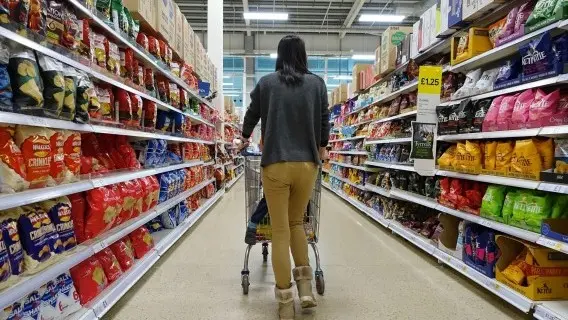
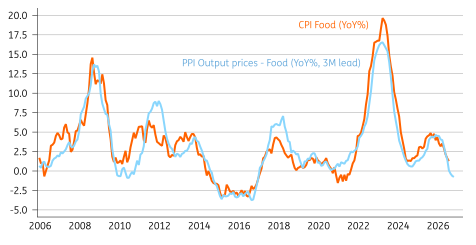
None of that was unexpected. What remains much more surprising, however, is just how benign food inflation is right now. Prices here were flat on the month, having fallen in month-on-month terms in the two prior readings, something that is highly unusual. A quick glance at producer prices suggests consumer food inflation could theoretically even go negative in annual terms over the next few months. We’re not convinced that will happen – and it was always going to take at least a year for the full effects of the Iran War to show up here.
But it should still be welcome news for the Bank of England’s hawks, who point to the influential role of food prices in setting household inflation expectations.
Producer prices point to negative food inflation
The news was fractionally less welcome on services inflation, which is ultimately what the Bank cares most about. Overall services CPI dipped to 3.4%, though mainly because of a low air fares reading. Strip that and other volatile/indexed categories out, and our calculation of the BoE’s preferred core services metric actually picked up a touch.
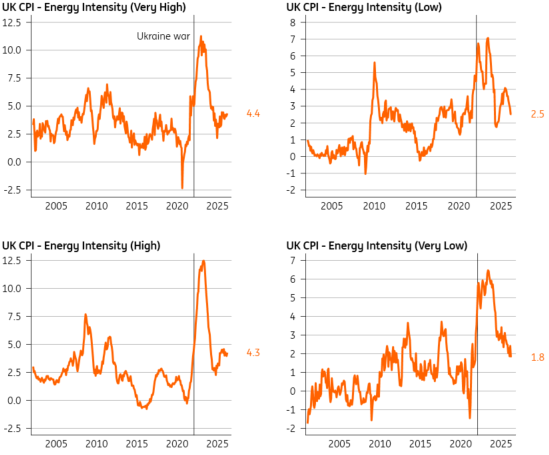
Still, the overall message here is that there’s scant evidence so far – beyond energy prices – that the war in Iran is having a tangible impact on inflation. It is very early days, admittedly. But we calculate UK inflation for products that have “very high” or “high” energy intensity – and so far neither has shown any sign of picking up. Groupings with lower energy exposure have continued to see inflation dip.
UK inflation by energy intensity
We currently expect headline inflation to peak around 3.2% into next winter, on the assumption that food inflation does start to pick up a bit. But that’s well below the 4% level, which we think is the threshold for the Bank to seriously consider rate hikes.
We continue to see the Bank of England keeping rates on hold this year, before resuming rate cuts next spring.
Content Disclaimer
This publication has been prepared by ING solely for information purposes irrespective of a particular user's means, financial situation or investment objectives. The information does not constitute investment recommendation, and nor is it investment, legal or tax advice or an offer or solicitation to purchase or sell any financial instrument.Read more