- Quick take
Middle East conflict to determine Poland’s monetary policy outlook
- 5 March 2026
- Poland
If the conflict in Iran is short‑lived, there would be room to cut interest rates to a real rate of 1%. However, according to the National Bank of Poland governor, tensions are unlikely to ease quickly, which has reduced the scope for further cuts. The target rate may be higher than the 3.25% we have projected so far. The next cut is in May at the earliest


Factors behind the rate cut
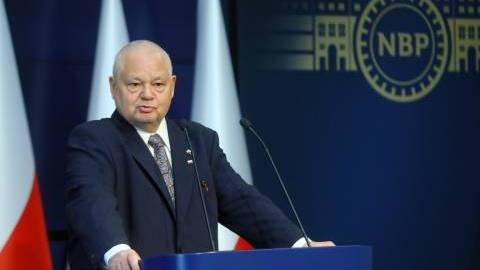
The governor of the National Bank of Poland (NBP) stated that the justification for lowering interest rates (the reference rate was cut by 25bp to 3.75%) was: 1) the decline in inflation in recent months and 2) improved inflation prospects, as suggested by the March NBP projection and forecasts from other analytical institutions. Adam Glapiński noted that inflation had been consistent with the target for half a year and had recently fallen below 2.5%. He added that the jump in prices following the attack on Iran had not been considered at the March meeting.
New projections and inflation outlook
The latest NBP projection indicates that inflation’s return to the target is sustainable and that by the end of 2028 inflation will remain consistent with the central bank’s target. The inflation path is lower than in the November projection. The outlook for core inflation has also improved, which is expected to stabilise at the long‑term average (since 2004), i.e. 2.5%.
Factors that will support low inflation:
- A decline in the pace of wage growth (January saw the slowest increase in five years).
- No concerns about the economy overheating (a decline in industrial and construction output in January).
- A continued fall in producer prices (PPI).
- Imports of cheap goods from China into Europe.
The outlook for economic growth is favourable. The NBP expects dynamic GDP growth in 2026 (3.9%), followed by a slowdown to around 3% in subsequent years, which should not generate inflationary pressure. The projection depicts a balanced economy with low inflation and solid GDP growth.
The March projection does not take into account the potential impact of the war in Iran on the macroeconomic situation. In our view, the projection rather assumes a quick completion of the National Recovery Plan (KPO) in 2026, hence the slower GDP growth expected in 2027. In our own forecasts, we assume that part of the KPO‑related investment will also support the economy in 2027.
Risks linked to the conflict in the Middle East
The main short‑term economic risk is the escalation of the conflict in the Middle East. At present, the main consequence is the increase in oil and gas prices, which represents an external supply‑side shock. If this surge were to persist, it would push prices higher but would also negatively affect economic activity.
This is the view we presented before the meeting, assuming that the war in Iran is a supply shock that raises CPI inflation but weighs on GDP.
According to the central bank, it is too early to assess the impact of the war in Iran on price and growth prospects or its full range of consequences.
Monetary policy outlook
The NBP governor reiterated that future decisions would depend on incoming data. He emphasised that a potential escalation of the conflict in Iran is the main source of uncertainty. For this reason, the Monetary Policy Council (MPC) is not signalling future moves, especially as forecasting inflation has become more difficult.
Regarding the current stance of monetary policy, Governor Glapiński declared restraint and caution. Should market conditions stabilise within 4-8 weeks, the NBP believes the macroeconomic consequences would be limited and there would still be room for further monetary easing. However, Adam Glapiński expects the conflict to last longer and potentially have more dire consequences, which the NBP will take into account at the next meeting.
The MPC assesses that the real interest rate should stand at 1-1.5%.
The tone of the press conference was broadly in line with expectations and did not provide any clear signals regarding the monetary policy outlook. In our view, further rate cuts are unlikely until the situation in the Middle East becomes clearer. The next cut would come no earlier than May. The room for further monetary easing is limited, and the terminal rate may turn out to be higher than 3.25% we had expected earlier, due to uncertainty related to the geopolitical situation.
Content Disclaimer
This publication has been prepared by ING solely for information purposes irrespective of a particular user's means, financial situation or investment objectives. The information does not constitute investment recommendation, and nor is it investment, legal or tax advice or an offer or solicitation to purchase or sell any financial instrument.Read more