FX Daily: Impact of US CPI mostly depends on equities
- 12 May
- FX
We expect a hotter-than-consensus 0.9% MoM US headline CPI print today. That can endorse the hawkish momentum in the USD curve even if the core rises at a moderate 0.3% MoM. Upside for the dollar depends more on whether those figures – paired with the stall in US-Iran negotiations – finally take some shine off ultra-resilient equities



USD: Another 0.9% MoM inflation jump
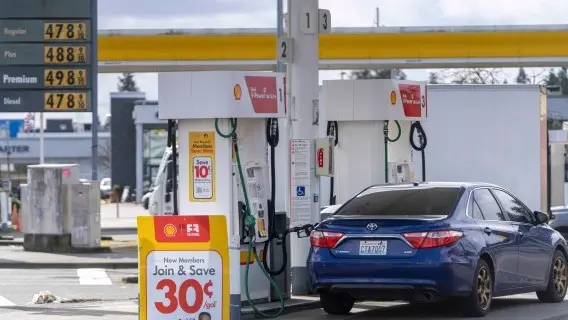
US CPI data for April is released today, and we forecast a second consecutive 0.9% MoM headline print, taking YoY inflation to 4.0%. This would be above the 0.6% MoM / 3.7% YoY consensus, although we are in line with expectations of a 0.3% MoM / 2.7% YoY core CPI print. The rebound in the headline will be driven primarily by gasoline and diesel prices, while a recovery in medical care and recreation prices should account for the 0.3% MoM acceleration in core.
That core figure is ultimately what matters most for the Fed. Still, it is probably too early to expect clear evidence of second‑round effects, and we suspect that a hotter‑than‑expected headline print could be sufficient to give the recent hawkish repricing in the USD swap curve some additional momentum. There is currently 7bp of Fed tightening in the curve by year-end.
The positive implications for the dollar, however, may depend more on the equity channel than on rates. Global risk sentiment has remained a more dominant driver than short‑term rate differentials and oil prices for several USD crosses, including EUR/USD. Good days for the greenback have generally coincided with bad days for equities of late. Let’s see whether fears of a rate hike can prompt fresh stock valuation concerns.
That said, CPI is still likely to play second fiddle to any meaningful developments related to Iran. Recent days have underscored how far apart Iran and the US remain on key aspects of a nuclear deal. At the same time, markets have been reluctant to price a renewed escalation, despite Trump’s claim yesterday that the ceasefire is “on life support” and further reports of military activity in the Strait of Hormuz. The longer this stalemate persists, the greater the upside risks for the USD, both in the near term and over the medium run – the latter via a more prolonged drag on the global economy, to which the dollar is typically negatively correlated.
Francesco Pesole
EUR: ZEW to remain pessimistic
EUR/USD has continued to hold up well alongside risk sentiment despite growing pessimism about a resolution in the Gulf. But any meaningful equity correction would likely prove incompatible with current levels, even if ECB pricing remains more hawkish than the Fed’s.
Today’s eurozone calendar includes the ZEW surveys, which will give a first glimpse of sentiment in Germany in May. Consensus is looking at a further deterioration in both the expectations and current situation indices. These surveys can be hard to interpret in such a geopolitically volatile environment, but the message should be one of (predictable) worsening in the eurozone’s growth outlook.
Our view of EUR/USD remains bearish-leaning unless we start to see tangible steps towards a US-Iran peace deal. A break above 1.180 hardly looks sustainable in this environment, and a retest of 1.170 looks more likely if anything.
Francesco Pesole
GBP: More political premium can build
Pressure on UK Prime Minister Keir Starmer intensified further yesterday after the Home Secretary, Shabana Mahmood, joined more than 70 MPs in calling for his resignation. Betting markets are now pricing in a very high probability that Starmer will leave office this year, and investors are likely to interpret any forthcoming scheduled address by the Prime Minister as a potential resignation announcement.
The pound started coming under pressure yesterday afternoon (after a strong session) as calls for Starmer’s resignation intensified. For the first time in a long time, some political risk premium seems to be emerging in EUR/GBP. That is, however, still small according to our model, around 0.3% short-term overvaluation.
The pound has plenty of additional room to build a negative premium, with markets likely to shift their focus to which candidate holds the best chance of replacing Starmer. Andy Burnham, Wes Streeting and Angela Rayner are considered the frontrunners. Notably, sterling came under pressure recently following reports that Burnham could seek a parliamentary seat to advance a leadership bid, reflecting concerns that his views on abandoning the fiscal rule could undermine a key anchor of market confidence in UK public finances.
Francesco Pesole
CZK: CNB may wait a long time with rate hikes
The Czech National Bank yesterday revealed details of its new forecast, and we heard more views from Deputy Governor Eva Zamrazilova. Of note from the forecast is an alternative scenario showing an economic slowdown if energy prices continue to rise, which the CNB forecasts would result in rate cuts of around 50bp, assuming oil prices above $100/barrel in the first half of the year. In that case, the Czech economy would be heading somewhere towards a 1.0-2.0% growth range. Of course, the CNB is also showing alternative scenarios showing higher rates, but Governor Ales Michl mentioned this scenario during a press conference last week as one of the reasons not to raise rates for now.
The Deputy Governor also mentioned that she sees a low risk of policy mistakes if the CNB does not react, and the central bank can avoid hasty reactions. We also heard a repeated warning that the CNB will react if necessary, but overall, a dovish subtext can be seen in the current communication.
This goes significantly against market pricing, which yesterday returned to about three rate hikes in the one-year horizon, with the first rate hike at the August meeting. This is similar to Poland and more than the ECB at this point. However, the CNB is making it clear that it does not want to rush into action and wants to keep the rate where it is, which is already a restrictive environment compared to other central banks such as the ECB, where the real rate is negative, according to the bank board.
EUR/CZK returned to pre-conflict levels last week and we see little reason for further koruna appreciation in the current setup. Headline inflation in the coming months should fall compared to April due to the base effect from last year and some decline in fuel prices, which will allow the CNB to wait further. The rate differential should decrease, and the Czech economy is already showing significant signs of slowing. Therefore, pricing hikes seem excessive and at the same time, EUR/CZK, apart from global sentiment, does not have much reason to further fall below 24.250 – rather the opposite.
Frantisek Taborsky
Content Disclaimer
This publication has been prepared by ING solely for information purposes irrespective of a particular user's means, financial situation or investment objectives. The information does not constitute investment recommendation, and nor is it investment, legal or tax advice or an offer or solicitation to purchase or sell any financial instrument.Read more