Carbon capture and storage enters a new era of progress
- 22 January
- Energy Sustainability
In 2026, Europe is set to expand its CO2 transport and storage infrastructure while demand for CO2 capture is likely to remain more subdued. Despite persistent policy obstacles and geopolitical tensions, the sector is still expected to make steady progress, as expanding the CCS supply chain is a complex, multi-year endeavour


Call 1: The year of value chain alignment amid mixed policy support
In 2026, carbon capture and storage (CCS) is set to shift towards integrated progress across capture, transport, and storage of CO2. Previously, each segment advanced largely on its own, exposing projects to greater risk and creating a chicken‑and‑egg problem: emitters were reluctant to invest in CO2 capture without guaranteed transport and storage capacity, while transport and storage operators were unwilling to build capacity without firm capture commitments. The next phase of CCS depends on aligning these segments so that emitters, transport operators and storage providers can plan with more confidence.
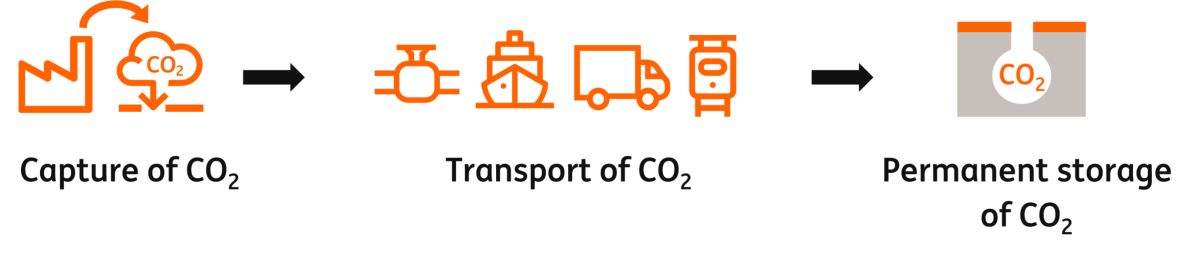
A clearer division of roles is emerging. Emitters are increasingly focusing on operating their own capture facilities, while specialised operators handle the transport and storage of CO2. This model is taking shape across regions, though the policy frameworks that support it vary significantly. In the UK, regulated revenue contracts are in place to shield transport and storage operators from under‑utilisation risk. Norway’s Northern Lights operates on a pay-per-use basis, while the Dutch Porthos project uses fixed capacity agreements with some flexibility.
While these approaches help clarify the local business case, investors require a thorough understanding of each region’s specific policies and risk structures. As we approach 2026, business models will continue to be refined, with risk-return profiles evolving to reflect the preferences of different actors within the CCS supply chain.
Policy uncertainty in the US
The US picture has been complicated by US President Donald Trump’s One Big Beautiful Bill Act, which has left its mark on the CCS sector (although less so compared to offshore wind or hydrogen). The Department of Energy's cancellation of $3 billion in industrial demonstration grants (including $1.2 billion for CCUS) and the potential loss of $7.5 billion in awards have disrupted capture projects and threatened the carbon credit market. Transport and storage progress is mixed: the EPA has sped up Class VI permit approvals, and Texas can issue new permits, but states like Louisiana have enacted moratoriums. Major pipeline projects, such as Summit Carbon Solutions, face ongoing legal and logistical hurdles.
A key growth opportunity is supplying low-carbon power to hyperscale data centres run by Google, Microsoft, Meta, and AWS, which still intend to meet net-zero targets by 2030. The 45Q tax credit requires at least 75% CO2 capture and high plant use. With current gas plant utilisation at only 56% on average, long-term power purchase agreements with must-run data centres are needed to ensure sufficient run times. These are now entering the market. Google, for example, agreed to purchase power from a gas plant with CCS in a first-of-a-kind deal last October. More recently, NextEra and ExxonMobil revealed plans for a 1.2 GW natural-gas plant with CCS designed specifically to serve data centres.
Increased support in Europe
Europe, meanwhile, is advancing its CCS agenda. The EU’s Net Zero Industry Act requires major oil and gas companies to achieve 50 Mtpa of CO2 injection by 2030, but this goal faces enforcement and planning challenges. Progress is most notable in the North Sea countries.
Norway leads the way with 13 storage licences on its continental shelf and open facilities for international emitters, supporting cross-border supply chains. In 2025, Germany passed a revised Carbon Dioxide Storage and Transport Act, enabling commercial-scale CCS and pipelines, including offshore storage and state opt-in for onshore. Germany also launched a €6 billion Carbon Contract for Difference auction for 2026, which will include CCS for sectors like (m)ethanol, steel and cement.
The UK is also moving forward, with projects like HyNet and Teesside now under construction. The UK government has allocated £21.7 billion ($28 billion) for CCUS; the distribution is still to be clarified. The UK’s approach aims to improve infrastructure utilisation and reduce costs, with a goal of storing 20-30 Mtpa of CO2 by 2035.
Overall, ongoing policy support and projects under development are expected to move the market forward in 2026, but costs remain a challenge.
Call 2: Increased focus on cost reduction, but short term potential is limited
In recent years, it has become clear that the total costs associated with capturing, transporting, and storing CO2 are significantly higher than originally expected, now ranging from €50 to €300 per ton. As is often the case with emerging technologies, early expectations were overly optimistic, while rising energy, material, and labour expenses have further driven up costs.
CCS costs across the value chain are typically in the $100-$250 range per ton CO2
Costs drivers for CCS

Current costs are substantial, and opportunities for rapid cost reductions remain constrained
High costs present a greater obstacle to widespread CCS adoption than technical challenges. Many projects currently fall within the $100 to $250 cost range, with ethanol and ammonia at the lower end and cement and steel at the higher end. This makes CCS heavily dependent on government support such as subsidies, carbon pricing, or tax incentives. In turn, lowering costs is critical for creating sustainable business models and ensuring the sector’s long-term viability.
According to DNV, an international technical advisor and assurance provider across the entire CCS value chain, average CCS capex costs could drop by 14% by 2030. By 2050, costs could fall by as much as 40%, mainly due to economies of scale, standardised design, and technological improvements in CO2 capture. Operating costs could also decline gradually as CCS scales, but these advancements are partially offset by rising material and labour costs. However, these benefits mostly apply to new CCS facilities. Retrofitting older plants is more difficult, especially if their remaining operational life is short, limiting the time to recover costs.
Lowering costs comes with political trade-offs
Implementing a cluster-based approach that leverages scale and proximity is key to rapidly reducing CCS costs, as increasing the number of users within each cluster helps prevent underutilised CO2 infrastructure. However, this strategy presents important trade-offs for policymakers.
First, focusing on cost reductions in existing clusters before expanding to new ones may be efficient, but it can slow progress in other regions that also need to cut emissions. The UK illustrates this dilemma; prioritising the rapid expansion of track-1 sites (HyNet and Teesside/Humber) can maximise economies of scale and lower costs, but may delay development in track-2 sites such as Scotland’s Acorn and Northeast England’s Net Zero project.
Second, the direction of industrial policy is crucial, as high energy prices threaten deindustrialisation and can impede CCS uptake, especially in Europe. This risk is heightened for globally competitive sectors like ammonia production (fertilisers) and refineries (fuels and chemical feedstocks), where CCS capture costs are relatively low due to concentrated CO2 streams. Involving more regionally focused industries, such as cement production and waste incineration, could reduce the risk of deindustrialisation, but may lead to higher overall CCS costs.
In 2026, policymakers will need to make more explicit decisions regarding these trade-offs. Without clear guidance, market participants are likely to factor these risks into the pricing of CCS across different clusters and projects.
Call 3: Strong momentum on the supply side, but don't forget about demand
In 2026, significant momentum exists on the supply side of CCS, with progress in storage and transport infrastructure, often state-backed. However, the major challenge is securing commitments from heavy industries to adopt CCS. By 2030, Europe is set to have much greater CO2 transport and storage capacity than actual CO2 capture. While it is natural for infrastructure development to precede emitter investments – since companies are unlikely to commit to capture facilities without reliable transport and storage options – the current disparity suggests a need for more coordinated efforts. Bridging this gap over the next few years will be critical for ensuring that investments in CO2 transport and storage infrastructure deliver maximum value by meeting adequate capture demand.
CO₂ Capture falls behind rapid expansion of transport and storage infrastructure
Capacity along the CCS supply chain in million tons CO2 per annum
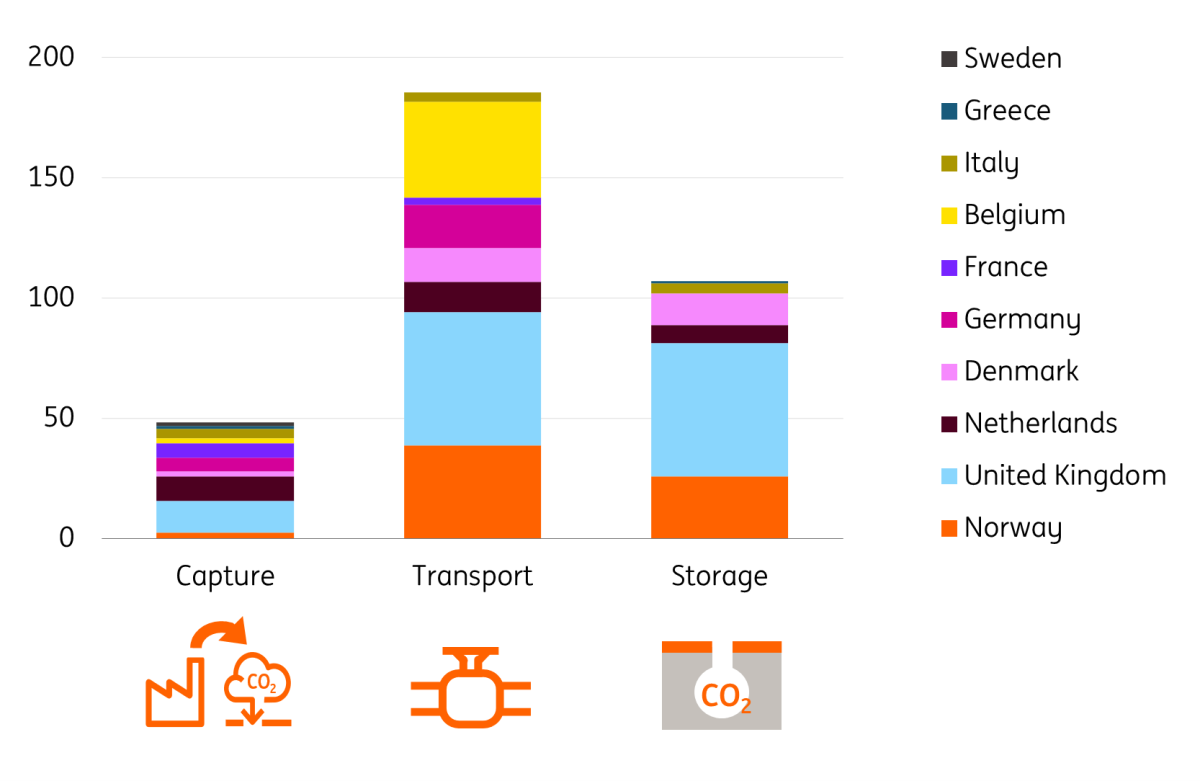
Providing demand-side certainty – through mandates for green products or carbon intensity rules – could strengthen the business case for CCS. A further challenge is the contract length mismatch; emitters seek short-term deals, while operators want long-term commitments for their assets that last multiple decades. A government-backed intermediary could bridge this gap by taking on contract duration risks.
Watch developments in voluntary carbon markets in 2026
An encouraging development is that CCS is increasingly applied to bio-energy plants, resulting in negative emissions (bioenergy with carbon capture and storage, or BECCS). This is spurred by developments in voluntary carbon markets, where tech companies and airlines are willing to pay substantial premiums for verified negative emissions credits. This is further amplified by the fact that enthusiasm for direct air capture (DAC) – which created machine-based rather than nature-based negative emissions – has diminished significantly. For example, recent policy shifts in the US have threatened to revoke $3.5 billion in DAC hub funding, and venture investment in the sector has dropped by 76% in 2025.
Content Disclaimer
This publication has been prepared by ING solely for information purposes irrespective of a particular user's means, financial situation or investment objectives. The information does not constitute investment recommendation, and nor is it investment, legal or tax advice or an offer or solicitation to purchase or sell any financial instrument.Read more
Authors


Included in the following bundle
Energy Outlook 2026: Abundant supply amid a challenging transition
- This bundle contains 6 Articles