Dutch healthcare sector set to expand further despite supply constraints
- 6 February
- Healthcare The Netherlands
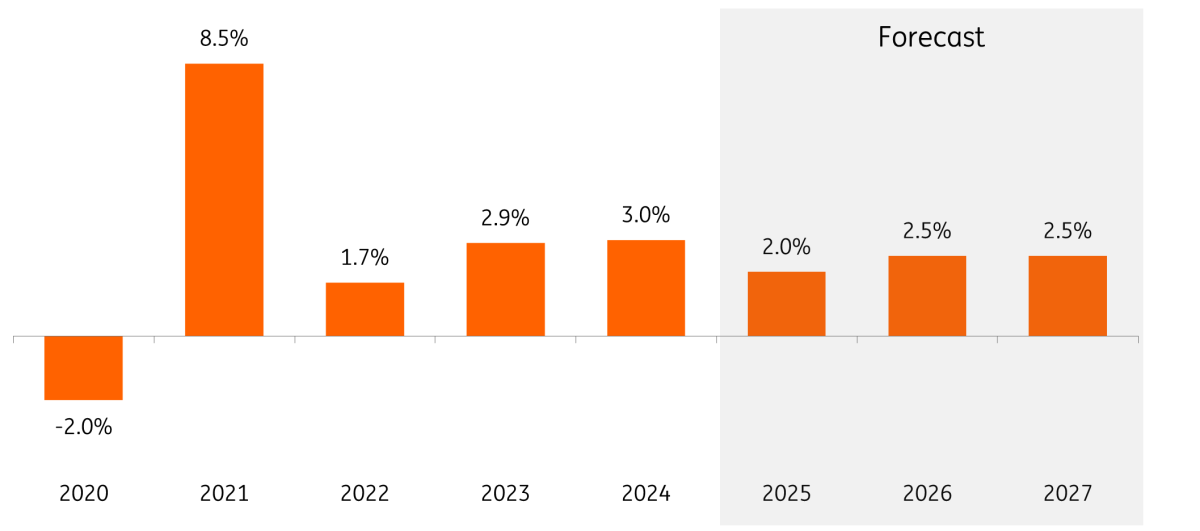
Productivity gains, temporary agency workers and an easing job market are helping to sustain growth in Dutch healthcare provision. These factors partly offset the persistent staffing shortages, which remain a big challenge for healthcare providers as self‑employed workers continue to leave the sector. We expect output to rise by 2.5% in 2026


More budgetary space, easing job market help meet growing demand
Dutch healthcare demand is structurally increasing on the back of largely structural factors such as the ageing population, the availability of better but more expensive treatments and the willingness and financial capacity to consume high-quality care. In addition, the government – about 83% of healthcare expenditure in the Netherlands is collectively funded – continues to create the budgetary space for further growth. Due to the fall of the cabinet and the conclusion of national agreements for curative care and elderly care, a number of planned cuts for 2026 have been scrapped. In addition, in 2026, extra money will go to disability care and especially youth care. The labour market will also become slightly less tight again in 2026, which creates some room for attracting new healthcare staff. All in all, the volume of care is expected to grow substantially by 2.5% this year.
Growth of Dutch healthcare should be slightly higher in 2026
Volume growth of output Dutch healthcare
Higher productivity growth compensates for outflow of self-employed workers
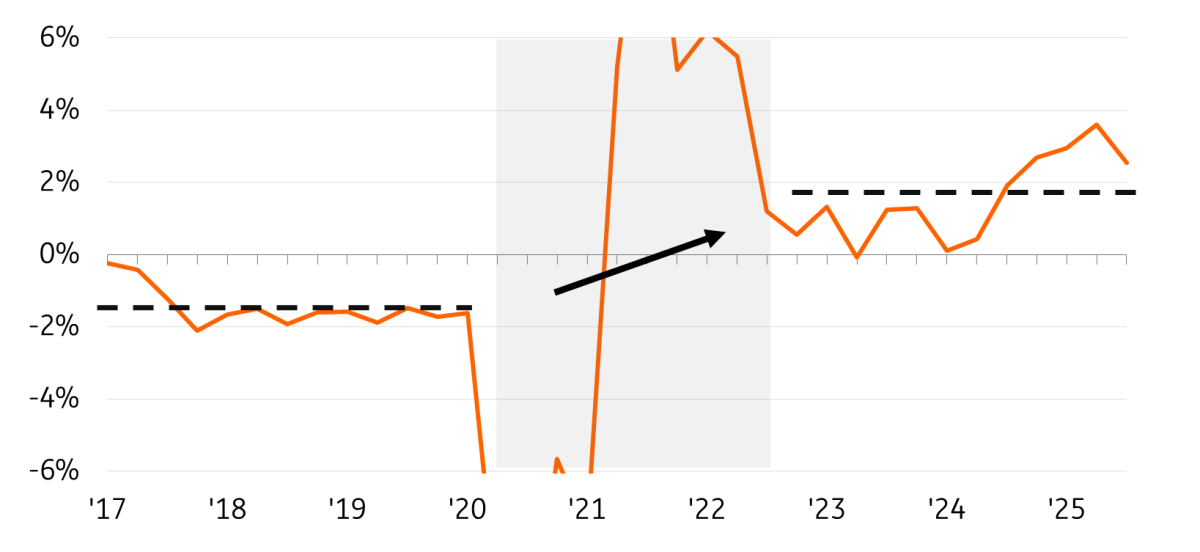
Healthcare providers must pull out all the stops to meet demand. Staff shortages remain very significant, also because of an outflow of self-employed workers. At the same time, increased productivity growth ensures that more care can be provided. In recent years, healthcare providers have been providing more care in fewer hours, productivity figures show. While productivity has hardly grown on average over the past 30 years (+0.1% per year), it has been increasing almost continuously since 2021. In the first three quarters of 2025, it has picked up further to an average of 2.8% per quarter. Over the past three years, productivity has grown by an average of 1.7% per quarter compared to a contraction of 1.5% per quarter in the three years prior to the Covid pandemic.
Productivity growth in the healthcare sector has increased since the pandemic
Labour productivity growth healthcare, per quarter
Digital applications and informal care boost productivity
The need to organise care processes in a smarter way in times of staff shortages forms the basis for productivity improvement. The wider use of digital tools is an important method to achieve this. Since the Covid pandemic, digital tools have become an integral part of healthcare. Healthcare providers are increasingly able to make better use of digital technology. For example, hospitals are increasing the occupancy of operating theatres more often through data-driven capacity management. Just like providers of elderly care, hospitals also treat and monitor more patients at home. Elderly care is also aiming for a greater deployment of informal caregivers to relieve their own staff. The rise of AI applications also helps by gradually reducing the registration burden and reducing the number of no-shows.
Healthcare providers keep attracting more staff as well
In addition to working more productively, healthcare providers are also maintaining growth by attracting more staff. The number of employees with a permanent employment contract is steadily increasing. Moreover, the number of healthcare professionals with a flexible employment relationship is growing much faster than before. The latter group includes temporary workers. The increase in the number of temporary workers is remarkably strong, with a total of 24% in the last five quarters.
13% fewer self-employed healthcare workers in the past five quarters
Healthcare providers continue to reduce self-employed workers across the board. Since the third quarter of 2024, the number of self-employed healthcare workers has decreased by almost 4,000 every quarter. Up to and including the third quarter of 2025, the decline amounted to a total of 19,000 self-employed workers, or 13%. The decrease is by far the largest in elderly care, at 63%. This shows that elderly care places great importance on having familiar, regular staff members. With the enforcement moratorium on false self‑employment now ending, they are taking the opportunity to phase out self‑employed workers where possible, creating a more balanced distribution of services and tasks in the process.
Coalition eyes €10bn of healthcare cuts but political backing remains unclear
The new minority government plans to cut nearly €10 billion from healthcare spending. However, approximately €6 billion of this amount involves increasing patient co-payments by raising the deductible on health insurance. This will moderate collective spending growth but will only slightly affect total healthcare spending growth. Given the political fragmentation, the need to secure parliamentary majorities for every new policy, and the strong resistance to the austerity plans from opposition parties, it is highly uncertain whether and to what extent these plans will be implemented.
Content Disclaimer
This publication has been prepared by ING solely for information purposes irrespective of a particular user's means, financial situation or investment objectives. The information does not constitute investment recommendation, and nor is it investment, legal or tax advice or an offer or solicitation to purchase or sell any financial instrument.Read more