China lowers growth target as geopolitical risk complicates outlook
- 5 March
- China
China's 2026 GDP growth target was lowered to 4.5-5%, after three straight years of “around 5%” targets. Most other targets were left unchanged. The slight softening shows that growth stability remains important, but steady fiscal targets are also signalling a reluctance to lean too heavily on fresh stimulus to bolster growth


Two Sessions to be key for this year’s policy backdrop
China's annual target-setting is always an important event. Since GDP growth targets were first published in 1990, China has fallen short of the target only a couple of times. Generally, betting on China to miss its target has been a losing bet for forecasters.
This year's GDP growth target was reduced to 4.5-5.0%, a slight softening from the more ambiguous "around 5%" target set in the past three years. While it was debatable how much flexibility "around 5%" entailed, most market participants viewed this as within 0.2-0.3pp of 5%. With the new target, there appears to be a tolerance for slower growth, which should give policymakers more flexibility to pursue quality growth, a priority in recent years.
The government work report outlined an intention for "laying a solid foundation for doubling per capita GDP by 2035 compared to 2020," a key goal set by President Xi in the past.
The softer GDP target was in line with our expectations, as we had hints of this outcome earlier when various provinces also revised growth targets lower. Our GDP forecast for the year is 4.6% year-on-year, which would fall within this range.
Anti-involution push continues in the background
The government recently published "Price Behaviour Compliance Guidelines for the Automotive Industry", taking aim at automakers' pricing cars below cost to gain market share. It also signalled a crackdown on price fixing. Much like the regulations introduced for platform companies in 2025, new guidance was issued to prevent major brands from pressuring dealers to sell certain models at prices that would leave them unprofitable.
The anti-involution measures have attracted considerable attention and debate over the past year. It can be argued that these measures are already beginning to show some effect. PMI and PPI data show that ex-factory price indicators have been trending mostly higher in recent months.
Middle East uncertainty a potential risk to outlook
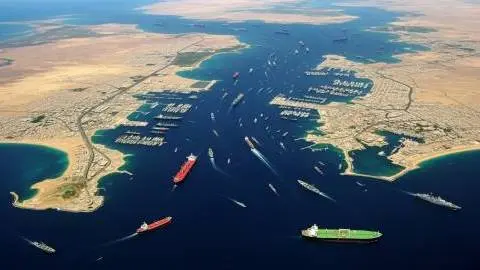
With the escalation in the Middle East, China, the world’s largest oil importer, could be negatively impacted, particularly if the situation continues to worsen. China’s official data shows zero crude oil imports from Iran, but widely cited third-party data estimates around 1.38m barrels per day of imports. This would be around 12% of China’s total imports of 11.55m barrels per day. It’s estimated that more than 40% of China’s oil imports go through the Strait of Hormuz. If the Strait remains blocked for an extended period, China may need to tap its strategic petroleum reserves.
If oil prices continue to rise for an extended period, the developments could lead to greater inflationary pressure in China this year. This could finally drive PPI inflation back into positive territory and the CPI over 1%.
China has a modest level of investment exposure to Iran, with around $4.5bn in cumulative outbound direct investment (ODI) as of the end of 2024. In 2025, we saw around $643m, or 0.4% of outward direct investments, going to the country. It’s unclear how these investments might be affected by recent events. The impact, though, is quite limited when considering China’s broader portfolio of outward investment.
We’re in wait-and-see mode on the potential impact on growth and inflation. For now, risks are balanced to the upside for inflation, while the impact on growth is expected to be limited. The domestic policy and external demand outlooks should be more important factors in the growth outlook.
Content Disclaimer
This publication has been prepared by ING solely for information purposes irrespective of a particular user's means, financial situation or investment objectives. The information does not constitute investment recommendation, and nor is it investment, legal or tax advice or an offer or solicitation to purchase or sell any financial instrument.Read more

Included in the following bundle
ING Monthly: War in the Middle East takes hold of the global economy
- This bundle contains 16 Articles