Belgian construction sector shows gradual recovery from slump
- 9 February
- Manufacturing, Construction and Retail Belgium
Belgium remains one of the few European countries where building permits are still falling, but signs of a bottoming out appeared in 2025. This should support a gradual recovery, with sector growth of 0.7% in 2026 and 0.8% in 2027. The building sector is expected to recover more slowly, increasing by 0.2% in 2026 and 0.5% in 2027


A fragile situation marked by low confidence and record bankruptcies
Business confidence in the construction sector remained under pressure throughout 2025. There was a short period of improvement at the very end of the year, but sentiment weakened again as 2026 began. At the same time, the number of bankruptcies continued to rise and reached a new record. Smaller companies and younger firms were hit the hardest. Almost three quarters of the companies that went out of business were less than 10 years old, which reflects the persistent vulnerability of new market entrants.
The sector is also seeing fewer newcomers. The creation of new construction firms has slowed, and the growth rate of active construction companies has been declining for years. At the same time, the need for additional housing and renovation work is becoming more urgent. Population growth, together with stricter rules on energy efficiency, requires a sufficiently large and resilient group of firms that can meet this rising demand. The result is a widening mismatch.
Construction feels the first effects of a rebounding housing market
Belgium’s housing market experienced a clear revival in 2025. Lower transfer taxes, more flexible renovation rules and the permanent 6% VAT rate for demolition and reconstruction all helped to stimulate activity. This improvement is slowly spilling over to the construction sector. Total production increased slightly and building activity began to show the first signs of stabilisation after several years of decline.
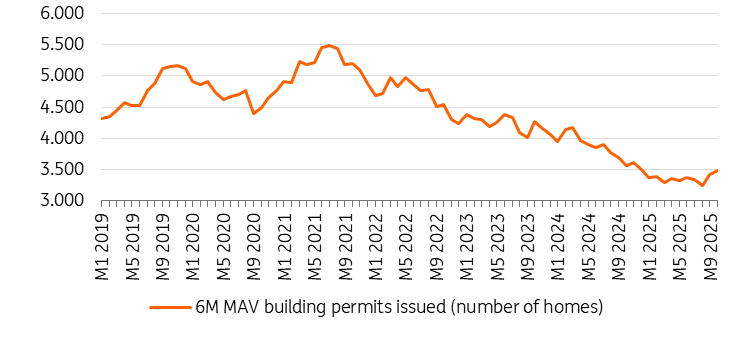
Building permits, which had been falling for years, seem to have reached their lowest point in 2025. A gradual normalisation now appears likely, although higher mortgage rates and slow, complex permitting procedures will continue to limit any rapid rebound.
Building permits finally seem to be moving in the right direction
Six-month moving average for the number of new home building permits issued
Looking ahead, the outlook is one of modest growth. For the full construction sector, we expect an expansion of 0.7% in 2026 and 0.8% in 2027. Building production is likely to recover at a slower pace, with a small increase of 0.2% in 2026 and 0.5% in 2027.
Structural challenges continue to weigh on Belgium’s construction sector
Despite the early signs of improvement, the construction sector continues to face several structural challenges. Building permits remain at historically low levels, especially for apartment projects. This widens the gap between the rising need for compact and affordable housing and the limited supply that is actually coming to the market.
Demand for new construction also remains subdued. Higher interest rates and elevated material costs continue to weigh on affordability for both households and developers. Although prices for construction materials have stabilised, they are still far above their pre-2022 levels. New European climate measures and trade policies could add further cost pressures in the coming years, which may reduce interest in new projects even more and contribute to delayed investment decisions.
In this environment, the recovery that began to appear in 2025 remains fragile. Weak demand and slow, complex permitting procedures continue to hold the sector back, making a strong rebound unlikely unless these structural constraints ease.
A more in-depth analysis on this topic has been published both in Dutch and in French.
Content Disclaimer
This publication has been prepared by ING solely for information purposes irrespective of a particular user's means, financial situation or investment objectives. The information does not constitute investment recommendation, and nor is it investment, legal or tax advice or an offer or solicitation to purchase or sell any financial instrument.Read more
