
Potential Lagarde exit fuels ECB succession talk
Speculation is once again mounting that Christine Lagarde could potentially make an early exit from her position as ECB President. How much substance lies behind these rumours remains to be seen. What we do know, however, is that it will rekindle discussions between European governments on how the next round of vacancies should be divided
 Italian version
This morning, the Financial Times reported a potential early exit for Christine Lagarde from her position as President of the European Central Bank. The rationale here is that a swifter departure would allow French President Emmanuel Macron and German Chancellor Friedrich Merz to appoint a new president ahead of the French presidential elections. Whether this is a political strategy that all French voters will appreciate is probably a different story.
In any case, this is the second time in less than a year that speculation of an earlier end to European Central Bank President Christine Lagarde’s term in office has cropped up. Putting aside the issue of exactly how substantiated it is, Lagarde's is the first ECB presidency that has been subject to such speculation. Will it prove damaging to the President's position, or even affect the ECB’s monetary policy? I very much doubt it.
However, what these discussions will undoubtedly do is accelerate the debate between European governments on how to fill the upcoming three vacancies at the ECB. It looks even more likely that the succession of Lagarde, Philip Lane, and Isabel Schnabel will be one big package deal, with Germany, France and Spain referring to their informal right of a permanent seat in the ECB’s Executive Board.
As the central bank has had two French presidents, chances for a third time are close to zero, narrowing the race for the next ECB presidency to Germany and Spain, with former president of the Dutch central bank, Klaas Knot, probably being a dark horse. The case for a German ECB president, however, will be complicated by the fact that the European Commission president is also German. And it is very unlikely that both the European Commission and the ECB will be run by two Germans. As Ursula von der Leyen’s term in office will end in 2029, the earlier the ECB decision is taken, the less likely a German ECB presidency will be.
Returning to the dark horse, we wonder how Knot could become ECB president with Germany, France and Spain all maintaining “one of theirs” on the Executive Board. We see one tangible possibility here: if current Dutch Executive Board member Frank Elderson were to step down to make room for Knot. It's happened in the past, and it could happen again in the future.
At present, the ECB’s current monetary policy story is rather unexciting. Yet, as the succession race narrows, the incoming round of musical chairs promises to be anything but – especially if Christine Lagarde truly intends to leave her very own ‘good place‘ earlier than expected.
This publication has been prepared by ING solely for information purposes irrespective of a particular user's means, financial situation or investment objectives. The information does not constitute investment recommendation, and nor is it investment, legal or tax advice or an offer or solicitation to purchase or sell any financial instrument. Read more
Download
Download opinion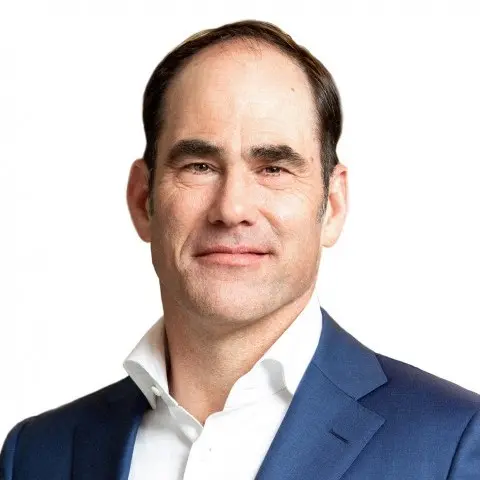
Carsten Brzeski
Carsten Brzeski is the Global Head of Macro for ING Research. Previously, he worked at ABN Amro, the Dutch Ministry of Finance and the European Commission. He is a 2019 JFK Memorial Policy Fellow at Harvard University and member of the Advisory Council on International Affairs for the Dutch government and Parliament. Carsten has studied at the Free University of Berlin, Northeastern University in Boston and Harvard University in Cambridge, USA.
Carsten Brzeski