Portugal: Domestic demand to drive growth
- 13 January
- Portugal
Portugal saw strong growth in 2025, but underlying productivity remains weak. With exports slowing, fiscal support from national and EU measures should help fuel another robust year in 2026, though sustaining momentum hinges on tackling structural issues


Strong headline growth in 2025 masks sluggish productivity
Portugal's growth is projected to outpace the eurozone average once again. Since the end of 2019, the country's growth has been 3.3 percentage points more than the eurozone average. This is an even stronger performance than its Spanish neighbour, largely due to its Covid-induced downturn being less severe. 2025 did start relatively slowly after a bumper fourth quarter in 2024, but it's managed to regain momentum.
However, this headline growth hides a less encouraging picture when adjusted for population and productivity. GDP per capita has only outpaced the eurozone by 1.4 percentage points, and labour productivity per person has barely improved, rising just 0.4%. In fact, compared with the wider eurozone, labour productivity per hour worked has declined by 1.2%, underscoring persistent structural challenges that weigh on long-term growth potential.
2026 growth to be led by domestic demand
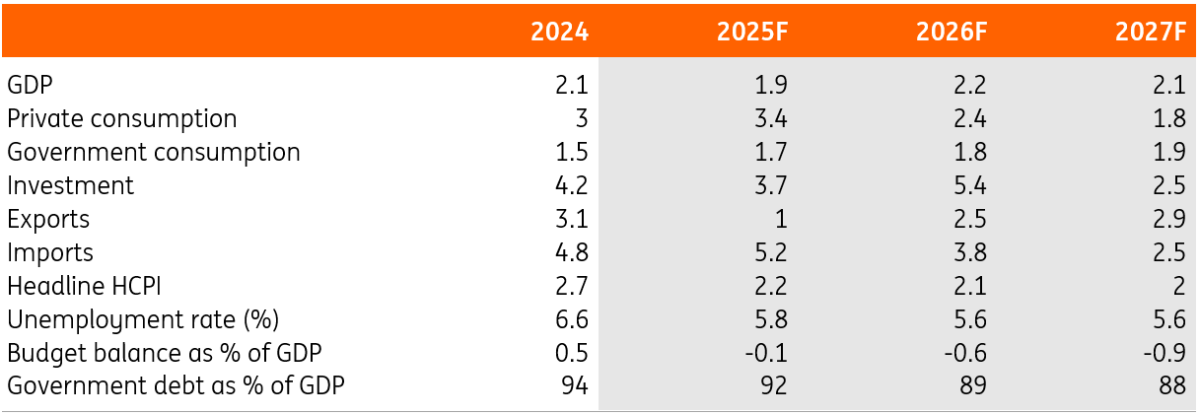
2026 is expected to mirror 2025 in terms of growth drivers, with domestic demand remaining the key engine. Private consumption will continue to play a central role, supported by government tax measures, most notably the reduction in personal income tax. These measures follow on from election pledges made during the 2025 snap polls. This led to a minority government that approved a 2026 budget, increasing expenditure at a faster pace than revenues. Nevertheless, favourable growth conditions should allow Portugal to continue reducing its debt-to-GDP ratio.
Exports are likely to remain under pressure as tourism momentum fades and the impact of US tariffs persists. According to the Portuguese national bank, exports to the US declined by an average of 7 percentage points relative to other destinations, a significant shock given that the US accounted for 7.7% of Portugal’s export market share in 2024. A modest recovery could occur in 2026 if eurozone growth picks up, particularly on the back of increased German investment, as Germany represents 11.6% of Portugal’s total exports.
Investment dynamics will be shaped by the final disbursements of EU Recovery and Resilience Facility (RRF) funds. As the programme winds down in 2026, Portugal still has around €6 billion in grants to allocate, equivalent to nearly 10% of annual investment spending. This mirrors the situation in Spain, where effective use of these funds could mark the beginning of a shift toward improved productivity dynamics and higher potential GDP. The ECB estimates that euro area potential growth could rise by 0.10-0.15 percentage points per year over 2020-2033 due to these funds. For Portugal, effective use of this support could help defy the OECD’s current projections of declining potential GDP growth.
Moderate inflation in 2026
On the pricing side, inflation eased early in 2025, reaching 1.9% year-on-year in March, but this trend reversed as prices for unprocessed food rose. While these upward pressures should ease this year, persistent labour market tightness is expected to keep services inflation elevated. Overall, we expect inflation to end 2025 at 2.2% and moderate slightly to 2.1% in 2026.
The Portuguese economy in a nutshell (%YoY)
Content Disclaimer
This publication has been prepared by ING solely for information purposes irrespective of a particular user's means, financial situation or investment objectives. The information does not constitute investment recommendation, and nor is it investment, legal or tax advice or an offer or solicitation to purchase or sell any financial instrument.Read more